01
Dialect coaching for screen & stage
Role-specific accent work for film, TV and theatre: research, sound changes, rhythm and melody, then rehearsal until it holds under pressure.
Dialect & Voice Coach Actor Writer
Dialect and voice coaching for actors, productions and speakers, from an actor and writer who does this work herself.
MFA Voice, NIDA
90-minute sessions · Balgowlah, Sydney or online
One-to-one, on set or in the rehearsal room. Every engagement starts with how you speak now and where the role needs you to be.
01
Role-specific accent work for film, TV and theatre: research, sound changes, rhythm and melody, then rehearsal until it holds under pressure.
02
Consistency across a shoot or season: prep with cast, notes from the monitor, ADR and loop sessions, and dialect guides for the whole company.
03
Breath, resonance, range and text work for actors and voiceover artists who want a free, reliable and expressive voice.
04
Self-tapes and in-room auditions: accent, text and choices, so you walk in ready. Drama school audition mentoring too.
05
Clarity, presence and confidence for presentations, media and public speaking, for leaders and professionals.
Approach
Getting the vowels right is only the start. The work is making the voice belong to this person, in this world, in every take.
The foundation
Knight-Thompson gives you a precise, physical understanding of how your mouth makes sound, without judging any accent as “correct.” That means you learn the accent’s shape in your own body, rather than copying a recording and hoping it sticks.
Tailored to you
Every client arrives with a different level of embodied skill and knowledge. I meet you where you are and build the work around you.
New to accent work? We start with the body: breath, release and finding your articulators.
Trained actor? We go straight to the accent’s oral posture, sounds and music, and into the text.
Phonetics-fluent? We fine-tune, stress-test under emotion and lock in consistency for set.
Where they grew up, who raised them, what they want to sound like and what they hide. Class, age, education and history all live in the voice, so we build the accent from the person outward.
An accent has to hold across scenes shot out of order, under emotion, through improvisation and in ADR months later. We anchor it in the body and in clear reference points so it stays steady from first take to last.
Period, place, genre and the world of the play or film shape how much accent the story needs. I work with the script and the director so each voice serves the scene, sits right beside the rest of the cast and supports what the text is doing.
The aim is an audience that never thinks about the accent, and a native speaker who hears one of their own. Truthful, lived-in sound rather than a performance of a dialect.
The goal
This work is not about making you more self-conscious or giving you one more thing to worry about in the scene. It is the opposite. We train the muscles, repeat until the sound runs on its own, and then you let go of it and play.
Tongue, lips, jaw, soft palate and breath learn new shapes physically, not intellectually.
Repetition moves the accent out of your head and into habit, so it holds when the scene takes over.
A released body and an easy breath, so the new voice feels like home rather than a costume.
You stop monitoring and start listening to your scene partner. The preparation is there when you need it.
The voice becomes a source of freedom and play, not a test you might fail.
How we get there
Play with every sound the mouth can make, through Knight-Thompson exercises like Omnish, so nothing feels foreign.
Feel exactly where lips, tongue, jaw and soft palate are, and name what you hear with phonetic precision.
Find the accent’s home setting of the mouth, the shape it all comes from.
Pitch, rhythm and stress: the accent’s melody, which carries more truth than any single vowel.
Map the key sound shifts through words and phrases until they land without thinking.
Take it into text, improvisation and emotion until it runs on its own.
We move through these at your pace. Where you start depends on what you already know in your body.
Voice sessions
Dialect sessions train a specific accent for a specific role. Voice sessions work on the instrument itself: your body, breath and sound, so every role, audition or talk has a free, reliable voice underneath it.
Each session moves through the same process, from the ground up, to get you into your best state. How long we spend at each stage depends on you and what you need that day.
Posture and alignment. We release habitual tension and find a balanced, easy stance so the voice has somewhere free to come from.
Low, open, responsive breath that supports the thought, not effortful control.
Clean, easy onset of sound at the vocal folds. No push, no squeeze, just efficient voice.
Opening up the spaces of chest, mouth and face so the voice carries warmly without strain.
Agile, precise lips, tongue and jaw, so every word is clear and alive.
Connecting voice to thought and meaning, so you speak the words as if for the first time.
Taking it all into the space: full-bodied on stage, or intimate and truthful for the camera on screen.
Method & lineage
My practice draws on the great voice, speech and text practitioners. Sessions use their exercises where they help you, chosen for your body, your role and the moment you are in.
Freeing the natural voice: releasing habitual tension so breath and feeling connect directly to sound.
In session: spine work, the sigh of relief, touching sound.
Fitzmaurice Voicework: Destructuring and Restructuring, pairing deep release with efficient, supported breath.
In session: tremoring, then focused breath into text.
Dudley Knight and Phil Thompson’s skills-based approach: precise awareness of the articulators, and no single “correct” way to speak.
In session: articulator mapping, building the accent’s oral posture.
Lessac Kinesensic training: learning voice by feel through structural, tonal and consonant energies.
In session: the consonant orchestra, call and tonal resonance.
The RSC’s great voice director: language as physical action, and the speaker’s right to own the words.
In session: walking the punctuation, moving and pushing against text.
Presence and the circles of energy: staying centred, connected and in the moment, on stage or in the boardroom.
In session: finding second circle, centred breath.
Iris Warren — the teacher behind Linklater’s work.
J. Clifford Turner — classical breath, resonance and speech for the theatre.
Barbara Houseman — practical voice and text work for actors.
Nadine George & Roy Hart — the full, expressive range of the voice, spoken and sung.
Konstantin Stanislavski — given circumstances, the dramaturgical ground of every voice.
Michael Chekhov — imagination, psychological gesture and the body as a way in.
Don’t see the one you need? Ask — new dialects are researched from primary recordings for each role.
IPA-trained, with rapid dialect acquisition, all taught through Knight-Thompson Speechwork.
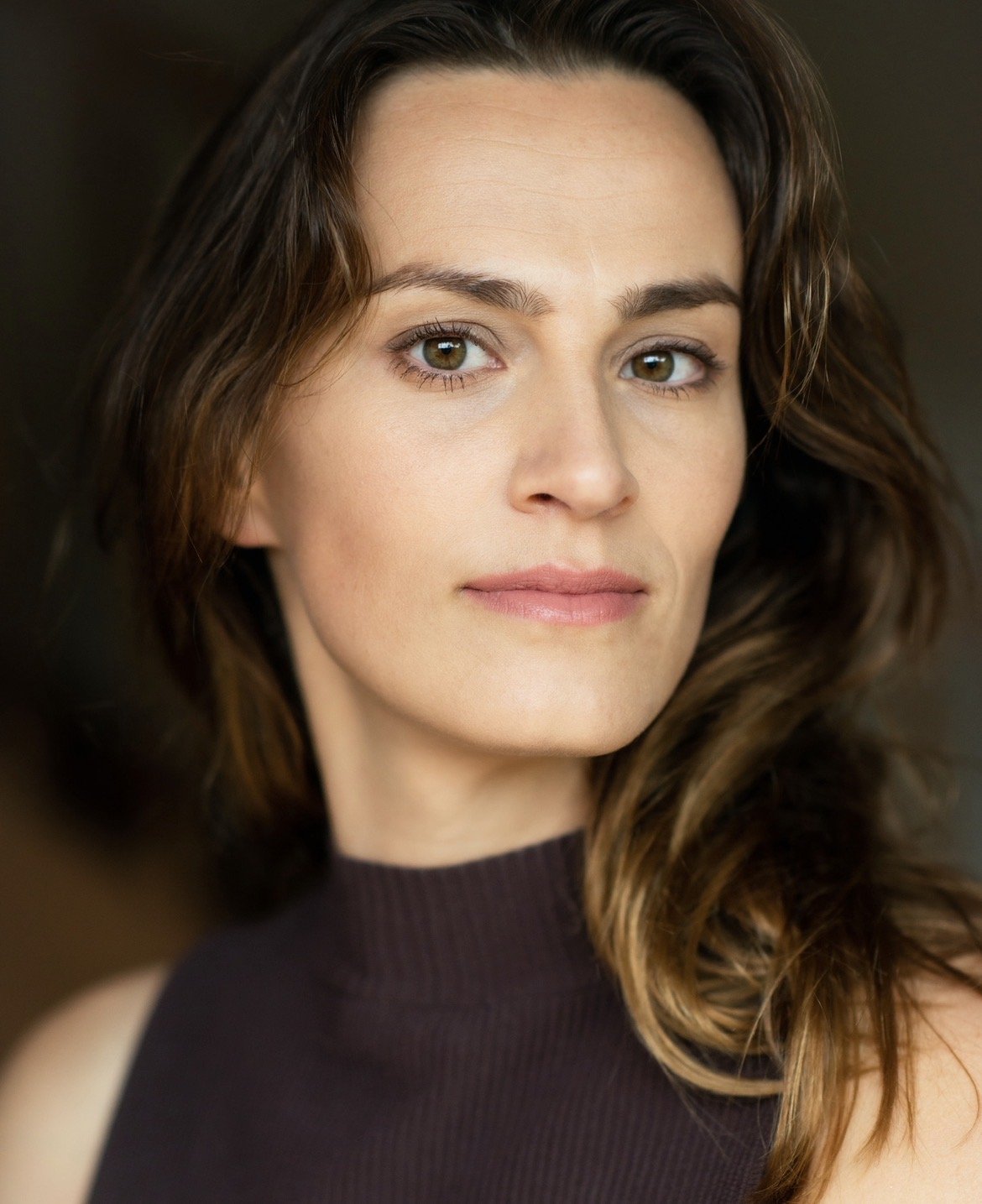
Lara Bouris is a Sydney-based dialect and voice coach with a Master of Fine Arts in Performance and Voice Pedagogy from NIDA. She works with actors, productions and professionals across screen, stage and public life.
As a working actor, writer and theatre director herself, she coaches from inside the craft — the accent has to serve the scene, not sit on top of it. Her practice spans conservatoire teaching, audition mentoring, public speaking coaching and commercial voiceover, including The Guardian Australia’s Full Story podcast.
“Not everyone has your intuitive gift with teaching and directing this sort of work, Lara, and you’re a quick learner.”
Katerina Moriatis, Masters Performance Teacher, NIDA
Also
Screen and stage, including Stan’s Totally Completely Fine. Showreel on request.
Screenwriting, poetry and The Future of Connection on Substack.
Co-directed and designed Dario Fo’s Can’t Pay? Won’t Pay!
Contemporary vocalist, live with Singing Sydney in The Rocks and at The Boatshed, Manly.
Sessions & fees
We need the extra time. Ninety minutes lets us warm up properly, train the new shapes, run the text until it becomes automatic, and finish with you feeling free in it rather than rushed. In person in Balgowlah, Sydney, or online wherever you are.
$195
90 minutes · AUD
Dialect, voice or audition work for actors and performers.
Book a session with me$900
5 × 90 minutes · $180 per session · AUD
The time a new accent needs to move from practice to second nature, ahead of a shoot, season or audition.
Book a block$260
90 minutes · AUD
Presence, clarity and confidence for leaders, presenters and professionals.
Book a session with meBy quote
Day or project rate
Film, TV and theatre: cast prep, rehearsals, on-set and ADR support.
Request a quoteTell me about the role, the production or the talk, and when you need to be ready. I’ll reply with available times.
90-minute sessions
In person: Balgowlah, Sydney
Online: anywhere